

Skip to content
MenuClose

Superintelligence

Advancing intelligence beyond human expertise.

We pursue intelligence that can extend what people are able to discover.

By superintelligence, we mean systems whose intellectual capabilities substantially exceed those of the best human experts across nearly all major intellectual domains. That ambition gives us demanding questions to investigate. Can a system recognize when its assumptions fail? Can it carry an unfamiliar problem through a sustained investigation, choose an informative experiment, and produce a result that withstands expert scrutiny?

Progress can begin with a better learning method, a physical insight, or a new way to test an explanation. We develop technologies and build companies that bring such advances into practical use. The problem and the evidence determine which methods deserve attention.

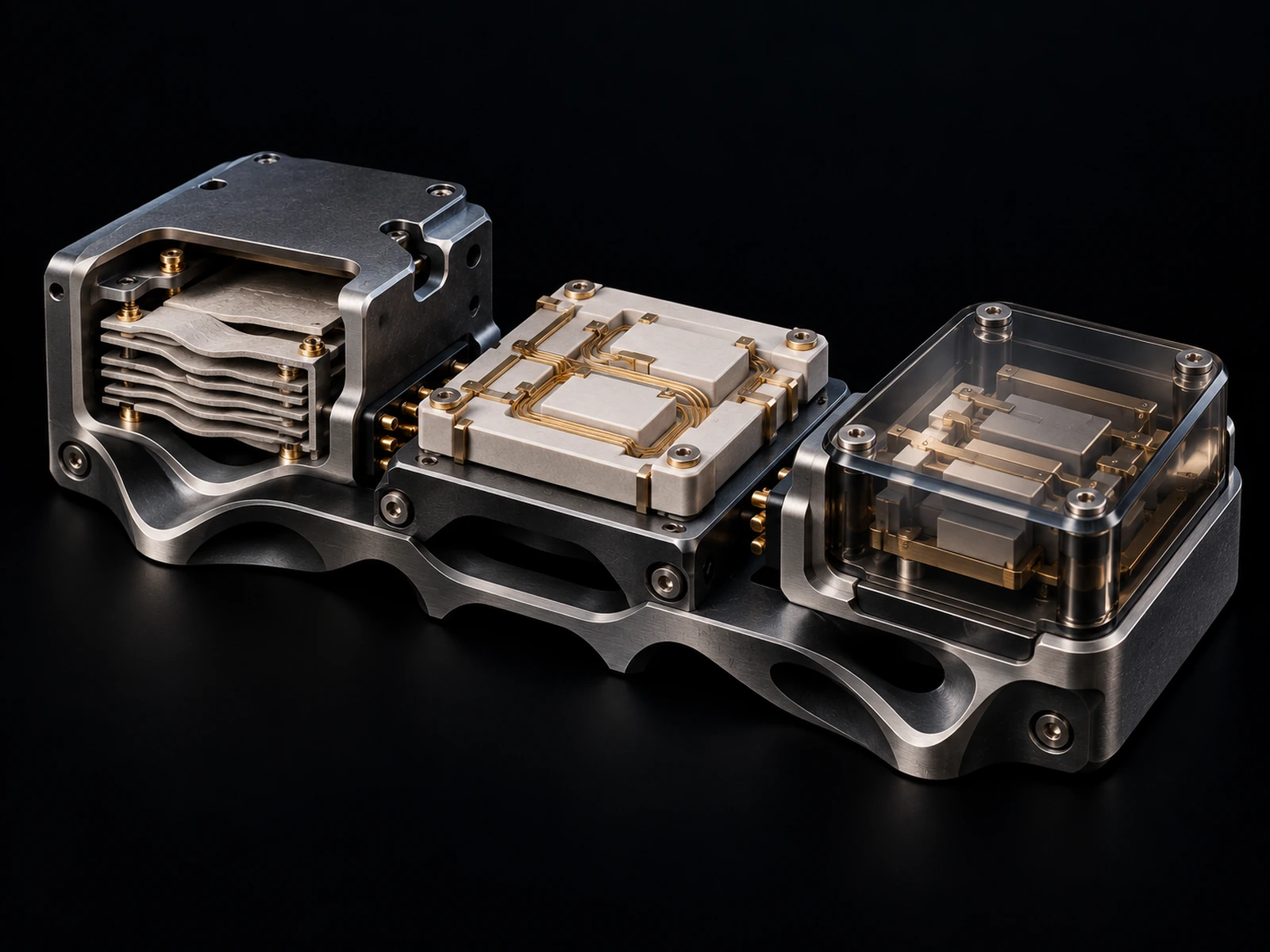
Three connected precision modules on a dark background: an open titanium housing with stacked plates, a white ceramic module with gold traces, and a module under a clear cover, joined by a machined base.

Learning and shared knowledge

An intelligent system should carry knowledge across tasks, connect information from different sources, and recognize when an earlier conclusion needs revision. This raises questions about memory, reasoning, and collaboration among specialized systems. The idea of a neural commons belongs here: a shared foundation of knowledge and representations that different systems can develop and reuse, with their sources and uncertainty available for examination.
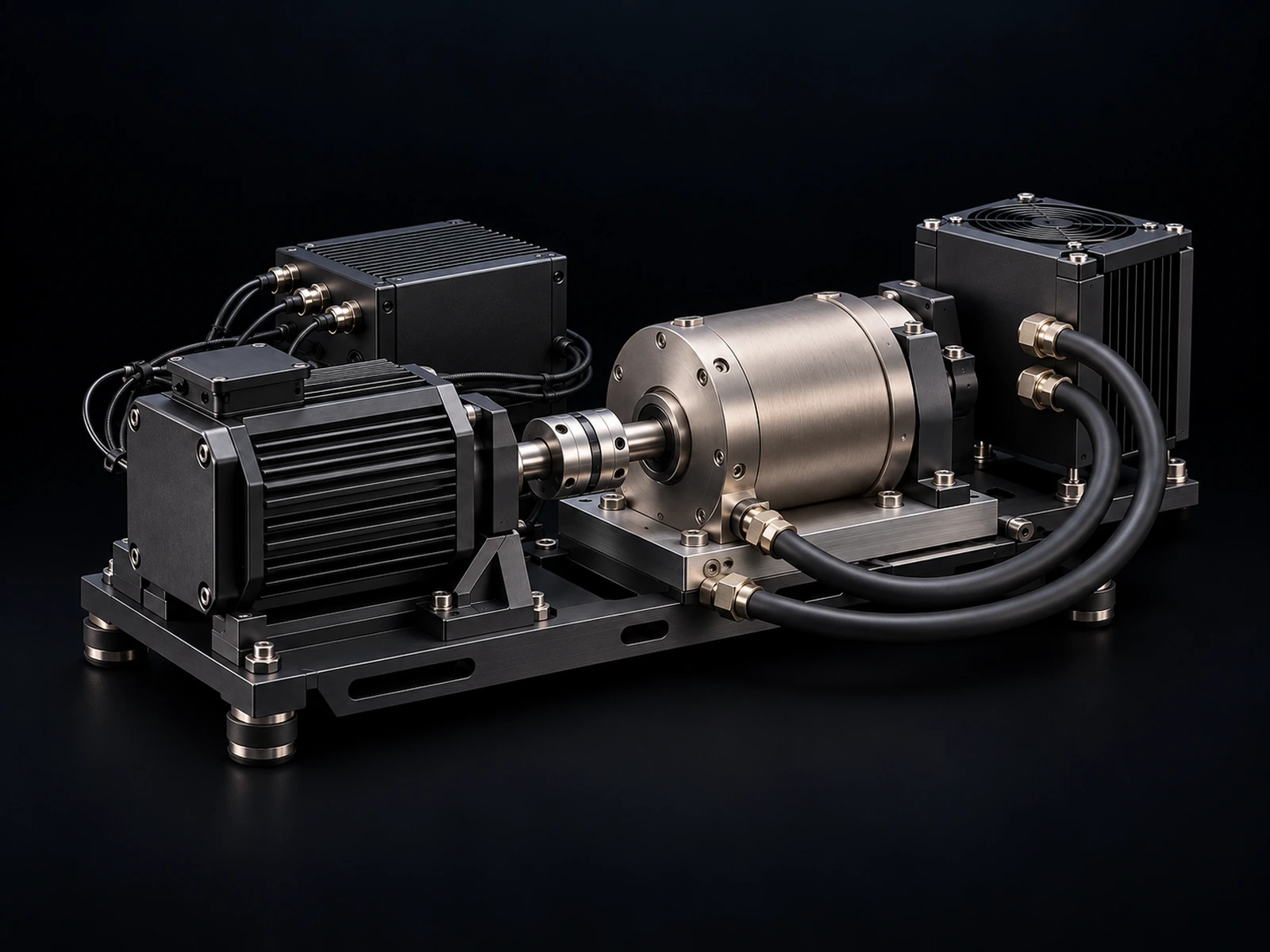

A machine assembly on a dark background: an electric motor coupled by a shaft to a brushed-metal load unit, with a control enclosure, a cooling unit and coolant hoses on a shared base plate.

Modeling the world

Models let us investigate consequences before committing to an action. Learned world models can capture patterns in experience; physics-informed AI can incorporate physical knowledge into learning and prediction. Co-simulation connects models of interacting systems so that mechanics, heat, software, and control can be examined together. The choice of model should follow the question being asked, and its predictions should be tested against relevant observations.

An intelligent system should be able to question the assumptions behind its own answers.

Understanding causes

A useful explanation helps establish what would change an outcome and under which assumptions. Causal reasoning examines those relationships through models, observations, and interventions. In explainable AI, this brings attention to the mechanisms behind a prediction and the evidence supporting them. An explanation should also reveal what further evidence could change the conclusion.

X causes Y

X 0.3

Y 0.3

Y causes X

X 0.3

Y 0.3

Both models fit the same observations. Setting X independently produces different predictions for Y.

Setting X to 0.7: where X causes Y, Y becomes 0.7. Where Y causes X, Y stays 0.3, because setting X removes its dependence on Y.

Graphite-dark gyroid-like microstructure with connected openings, resting on a dark surface under blue edge light.

Discovery and invention

Discovery involves choosing a worthwhile question and finding a way to test an answer. Advanced intelligence could help connect findings across disciplines, formulate hypotheses, develop algorithms, and explore designs that are difficult to search by hand. Useful progress produces something others can examine: a proof, a reproducible computation, an experimental result, or a prediction tested against new observations.

How we judge progress

Unfamiliar problems
Apply knowledge under conditions that differ meaningfully from training and prior evaluation.
Sustained investigation
Maintain useful reasoning, check intermediate results, and recover from mistakes.
Judgment under uncertainty
Recognize missing evidence, seek it when necessary, and revise conclusions.
Independent verification
Produce results that can be examined against strong alternatives and appropriate real-world tests.

These questions also connect our work to security intelligence, where decisions must hold under disruption, adversarial behavior, and consequential constraints.

Explore Security Intelligence

From the Journal

View Journal